
The Vilas County Weekly Arrest Report
Vilas County's official multi-day source is the sheriff's Weekly Arrest Offenses PDF. A link on the records and contact page leads to it. The word "Weekly" signals a batch period, nothing more. The office publishes no public archive depth. It offers no fixed posting weekday and no guaranteed coverage cutoff. So save the details yourself. Record the report title, date range, page count, visible agency and offense fields, plus any note printed on the file.
Never mistake the weekly report for a complete booking history. It covers the arrest-offense activity the sheriff selects for publication. The current inmate list answers a current-custody question instead. Someone named in the weekly report may have bonded out, transferred, or been released. That can happen long before you read the page. A person arrested this week may not show up at all. They wait for the next batch.
Weekly is not live. Treat each blotter entry as historical arrest-offense reporting. For current custody, check the jail, Wisconsin VINE, or another official status route.
Vilas County's agency mix shapes what a weekly report can tell you. Sheriff activity, Eagle River Police work, and Lac du Flambeau Tribal Police matters each carry separate records. A county report may name a partner agency. Still, it never becomes that agency's complete record.
How to Read the Vilas County Blotter
Read the blotter as a dated record. It is not a live list of people. Save the source context first, then interpret any offense line.
- Open the official records page and follow its Weekly Arrest Offenses link rather than a guessed archive URL.
- Record the report title, covered dates, document date, and page number before copying any field.
- Separate the arresting agency, offense, and booking information from the later court result.
- Use the Current Inmate List or VINE only when the question is present county-jail custody.
- Ask the sheriff records unit for the incident, booking, image, CAD, or other releasable record beyond the weekly summary.
Pair the report with the Arrests Last 24 Hours page. That page explains why the current PDF serves only as a fallback for same-day questions. It does not turn the weekly report into a 24-hour feed. The two windows belong apart. One is a batch summary; the other is a current-custody check.
A CAD report adds dispatch context. But a CAD call is not always an arrest. It may be a medical call, a traffic event, or a request for service. Label the sheriff's weekly CAD Calls Received PDF as incident activity when you use it. Think of the official weekly report as a dated county record. It is not an online gallery. Secondary coverage can help pin down an event date. Yet the official PDF and the records office remain the better sources. They matter most for the report itself. For the next record layer after a weekly arrest report, the Wisconsin Court System case-search page is the place to go.
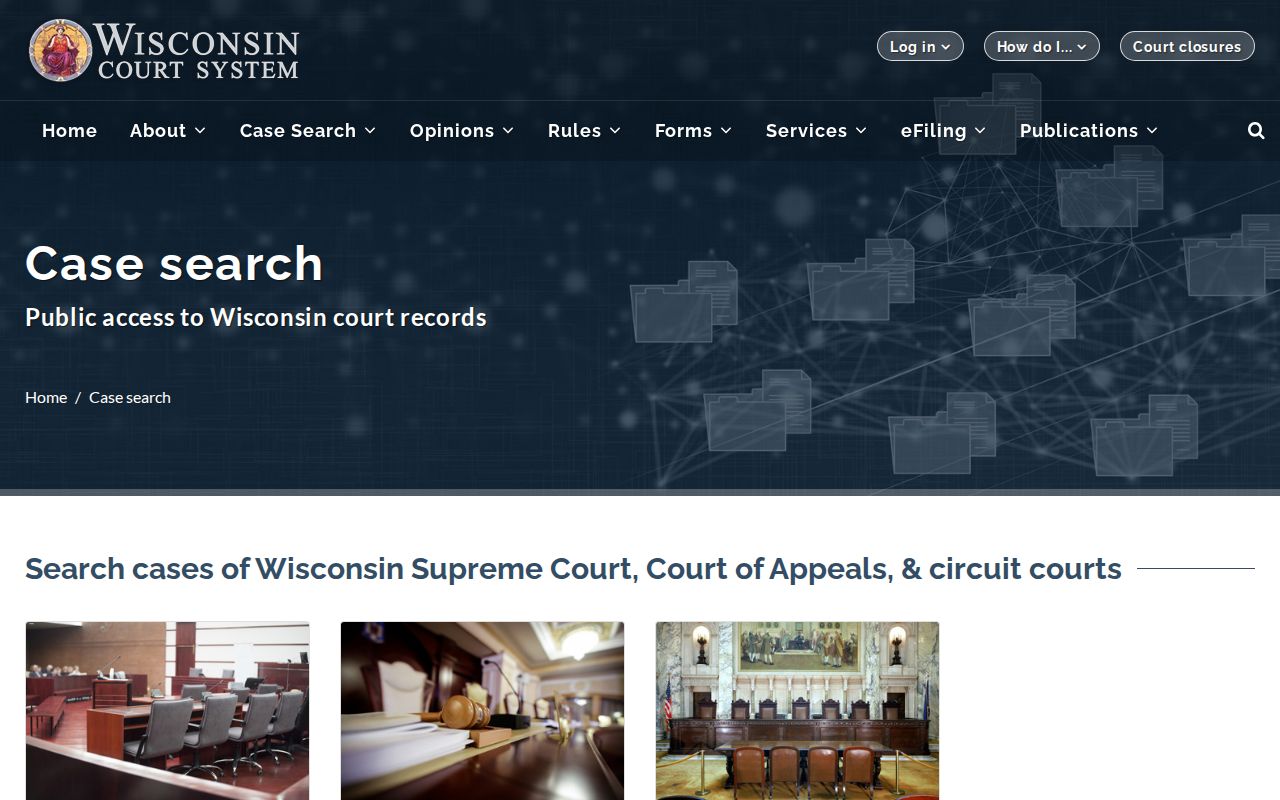
A court search adds filing context. It is not a live jail or blotter feed, though.
What a Vilas County Blotter Entry Shows
No single field layout governs every future Weekly Arrest Offenses PDF. The current roster field family shows what to verify. So capture each weekly report visually, every time you use it.
| Entry detail | Meaning and caution |
|---|---|
| Report period | The week or date range selected for the batch; it is not the time of each arrest. |
| Agency | The law-enforcement agency connected to the reported event, when shown. |
| Name or identifier | A published record label; confirm identity with the originating agency. |
| Offense or statute | The charge or reported offense, not a conviction. |
| Booking number | Useful for locating a jail record if it is shown. |
| Location or time | Ask for the incident or CAD record if the weekly report does not expose it. |
| Photo | The weekly report is not a routine photo source; request any releasable image specifically. |
| Disposition | Usually belongs to the court record, not the arrest-offense batch. |
The Current Inmate List carries Booking Number, Name, Name Number, Statute, Offense, Court, and Class. Booking date and time are missing. So are arresting agency, location, bond, release, case number, hearing, and any photo field. Do not fill those gaps from a newspaper headline. Do not use an unofficial mirror site either.
A blotter entry can outlast the custody it records. It may be the best public sign an event was reported that week. It cannot tell you whether the person sits in Vilas County Jail right now. Use the court record for filings. Use VINE or the jail for current custody.
Weekend and Holiday Arrest Reports
The county publishes no guaranteed weekend or holiday posting schedule. A weekend arrest may first surface in a later replacement roster. Or in the next Weekly Arrest Offenses PDF, a police report, or a records response. Holiday closures can slow walk-up requests, while the jail and dispatch keep their own operational roles. A missing Monday entry proves nothing about weekend arrests. Local newspapers run on their own clocks. The Vilas County News-Review carries weekly Police Report and court coverage. The Lakeland Times works event by event, covering a complaint, a bond event, an agency statement, or a court appearance. Neither paper is a complete weekend log. Neither supplies a guaranteed current-custody answer. When a weekend event matters, compare three labels: the incident or arrest date, the booking date, and the date a source was posted. Those dates often differ. A newspaper may publish after the sheriff's document. A replacement roster may drop a person after release. And a weekly report may summarize the offense without showing where the person is now.
Blotter Archives and Record Retention
Vilas County publishes no archive-depth rule. The sheriff's site posts current and weekly PDFs. Those links point to living documents. A file can be swapped out at any time. An old search result may land on a version that no longer matches the official roster. Nothing on the site promises that past booking sheets, photographs, CAD calls, or digital evidence stay online.
Need an older report? Ask for it directly. Make a narrow public-records request through the Vilas County Sheriff records page. Name the report type and the exact date range. Include the agency if known, and whether you want an image. The page promises handling as soon as practicable, in the order received. Fees appear there too. Expect possibly $5 for a search and $5 for an incident report. Add $0.25 per page past twelve, plus separate charges for media and CAD calls.
Old records do not always vanish. The Wisconsin Historical Society says local records of lasting value can be transferred or offered before destruction. Check its government-records guidance for a matching Vilas County series. Then ask the sheriff or the county custodian. Does the local copy survive, was it destroyed under an approved schedule, or did it move elsewhere?
Beware of borrowed numbers. Retention schedules from other Wisconsin counties are not Vilas policy. Never import another county's figure into a Vilas County arrest log. When you rely on a weekly PDF, save the official URL, the report date, the access date, the page count, and the field headings. The archive question concerns history, not present detention.
Archives can keep records the sheriff's replaceable web documents drop.
Vilas County News Blotters Are Secondary
Local news adds color, not custody facts. The News-Review runs a weekly Police Report. The Lakeland Times covers individual incidents. Together they show how the sheriff, Eagle River police, and other agencies read in public reporting, which makes them useful for context and date clues rather than for who is in jail today. The departments list no official booking-photo gallery. A story image should carry its source label rather than a booking-portrait one.
Third-party pages can inflate a weekly report. JailRosters hosts an older copied Vilas PDF format. JailExchange offers unofficial search guidance. Both can go stale, so check anything there against the sheriff's own source. A copied PDF says nothing about present custody.
Sequence matters when news reports an arrest. A weekly blotter entry records selected activity and nothing more. WCCA may later list a different charge, or even a dismissal. One headline is never the whole story.
Blotter Arrests Are Allegations
A blotter entry can outlive a stay in jail. It may still show after release. A missing entry may simply reflect publication limits. Check WCCA for the filed case and disposition. Check the county jail or VINE for present custody.
The blotter records reported activity for the week, while WCCA and VINE carry the court case and the current custody status.